Zelenskyy Warns Russian Airspace Becoming Unsafe for Commercial Airlines Amid Drone War Escalation
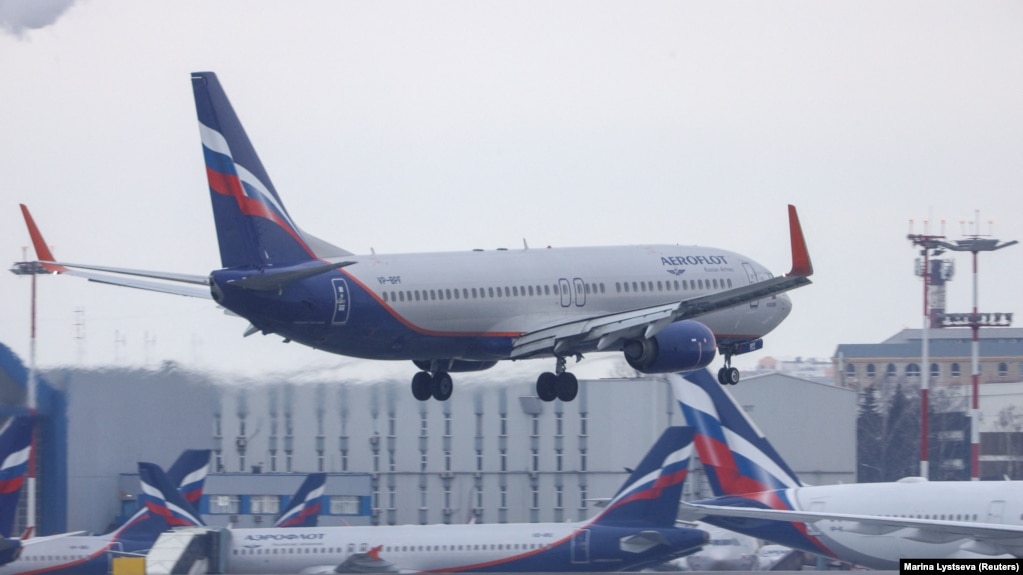
Ukrainian President Volodymyr Zelenskyy has issued a stark warning to the international aviation industry: Russian airspace is becoming increasingly dangerous for commercial flights, as Kyiv's drone campaign deepens inside Russian territory.
In a statement that marks a significant escalation in the information war between the two countries, Zelenskyy said there was no intention to directly threaten civilian aircraft, but that the growing number of Ukrainian attack drones operating over Russia "would have to be taken into account" by airlines, insurers, and airports.
"We want to warn every airline that uses Russian airspace, every insurer, and everyone who still uses Russia's key airports: Russian airspace is becoming completely unsafe," Zelenskyy declared.
Kyiv Notifies International Aviation Body
Ukraine's Foreign Secretary Andrii Sybiha confirmed that Kyiv had formally notified the International Civil Aviation Organization (ICAO) about the deteriorating safety situation, citing increased military activity across Russian skies.
The warning comes as Ukraine has demonstrated a rapidly expanding capability to strike deep inside Russia. In recent months, Ukrainian forces have targeted oil refineries, warehouses, and military installations near Moscow, St Petersburg, and other locations up to 2,000 kilometers (1,250 miles) from the border.
Drone Warfare Intensifies
While reliable figures remain elusive, military sources indicate Ukraine is now capable of launching several hundred drones daily, with a stated target of reaching 1,000 per day to pressure Russia's economy.
Justin Bronk, an aviation analyst at the Royal United Services Institute, told The Guardian that Ukraine could potentially force "periodic closures of Russian airports on a semi-regular basis" by maintaining an element of surprise through small, unpredictable waves of drones.
However, Bronk cautioned that permanently closing an airport would be challenging, as sustained attacks would become predictable and easier for air defense systems to counter.
Putin Responds, Vows More Strikes
Russian President Vladimir Putin dismissed Zelenskyy's warning as "state terrorism," stating flatly that "negotiations are not conducted with terrorists."
In one of his most detailed public updates on the war, Putin told reporters following a two-day summit in Kyrgyzstan that Moscow's forces have been ordered to intensify strikes against Ukraine's energy infrastructure ahead of winter. The campaign aims to knock out heating and electricity supplies during the freezing months.
"The Russian armed forces have been ordered to prepare and carry out mass strikes on Ukraine's energy facilities," Putin said. "They are striking us, and they will get a response. I'm not saying we'll collapse the economy there, but it's a serious challenge for them."
When asked whether Russia would strike British military facilities in the UK that produce weapons for Ukraine, Putin sidestepped the question, saying only: "That's a military secret."
European Concerns Mount
The warning about Russian airspace safety echoes broader European anxieties about Moscow's expanding reach. European Commission President Ursula von der Leyen said Wednesday that a recent drone attack on Leipzig airport marked a "new escalation" by Russia, part of a pattern of "repeated incursions in our airspace, drones that paralyze our airports, interference with our critical infrastructure."
German officials confirmed Tuesday that Russia was responsible for an explosive-laden drone discovered at Leipzig airport last month near a Ukrainian plane used to transport weapons.
"Europeans are faced with the hard truth that this is the new normal," von der Leyen said. "We have to step up, and that means being ready to respond to Russia's recklessness faster and better."
NATO Secretary General Mark Rutte echoed those concerns, telling reporters that Russia had grown "increasingly reckless" with an uptick "in malign activities targeting our territory directly."
EU Prepares New Sanctions
In response, the EU is drawing up further sanctions targeting approximately 1,600 companies and individuals. Polish Foreign Minister Radek Sikorski urged the bloc to expedite these measures following the Leipzig attack and other incidents.
"Hybrid war is not just nuisance on the internet," Sikorski said on the sidelines of a European meeting. "Hybrid war means assassination squads, it means arsonists, it means blowing up moving trains, like in Poland, it means breaches of airspace with drones and cruise missiles. We need to convince Putin that such actions are not for free."
EU foreign policy chief Kaja Kallas characterized the Leipzig attacks as bearing the "hallmarks of state-sponsored terrorism," adding that Brussels had summoned Russia's ambassador to the bloc.
Ukraine's Airspace Remains Closed
Ukraine's own commercial airspace has remained closed since the full-scale invasion began in February 2022, as Russia has demonstrated the ability to strike targets throughout the country.
The specter of civilian aviation disasters in the region looms large. In July 2014, Malaysian Airlines Flight MH17 was shot down over eastern Ukraine by Russian-backed separatists using a surface-to-air missile, killing all 298 people onboard.
Mobilization Fears and Battlefield Realities
Putin sought to project confidence in Russia's military position, despite sluggish progress on the battlefield. He pushed back against Western intelligence suggesting he was receiving an overly optimistic picture of the war, insisting that his multiple information sources provided an "objective assessment."
Speculation about a potential second round of Russian mobilization — following the September 2022 call-up of approximately 300,000 reservists — has intensified. While Zelenskyy and Western officials have suggested Moscow could be preparing such a move, Putin dismissed the prospect as "nonsense."